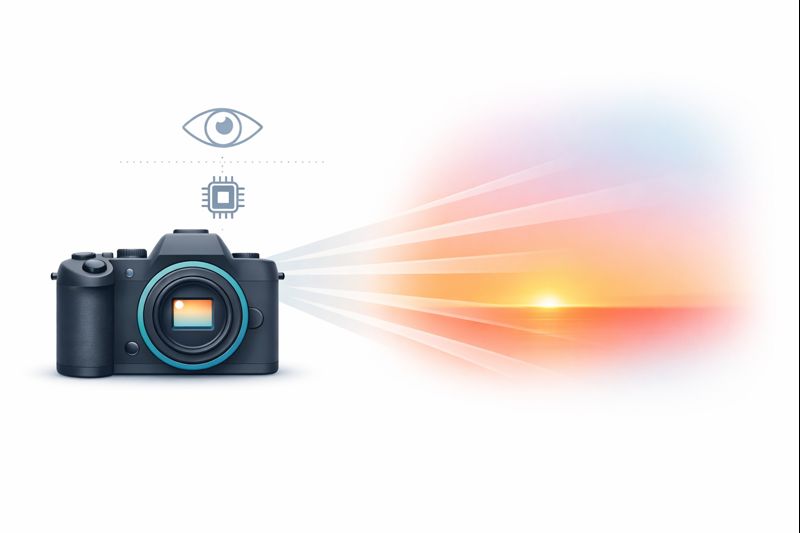
The Camera and the Eyes see differently. But we want to see through the Camera and produce images as a human sees them.
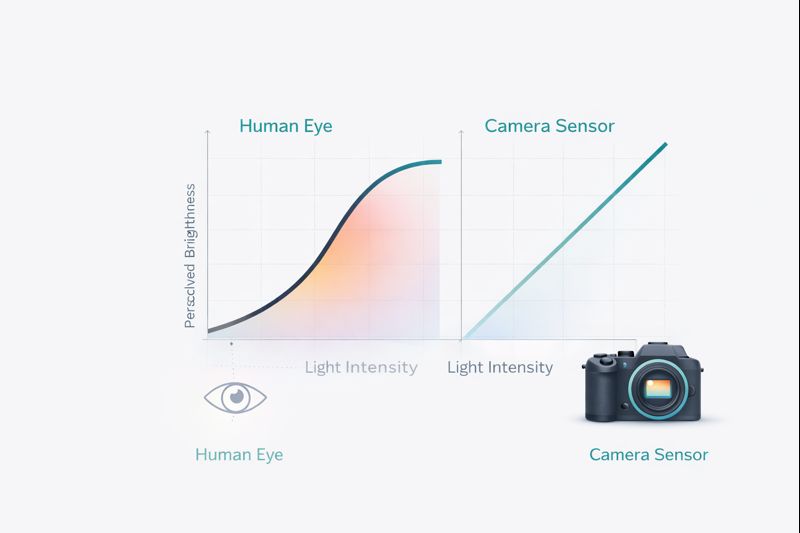
Loosely speaking, the relationship between the change in brightness of a scene and how we see is different than a camera. With a digital camera, when twice the number of photons hit the sensor, it receives twice the signal. We perceive twice the light as being only a fraction brighter. Humans are much more sensitive to changes in dark tones than we are to similar changes in bright tones.
How Human Eyes and Cameras See Differently
Human vision is non-linear. We are more sensitive to small changes in darker areas and less sensitive to similar changes in bright areas.
A digital camera works linearly. When twice the amount of light hits the sensor, the camera records twice the signal—without prioritising shadows or highlights.
This fundamental difference explains why camera footage often feels unnatural before processing.
Example In a dim room, your eyes can still see details clearly, while a camera may struggle to retain shadow information.

The Brightness Challenge in Cameras
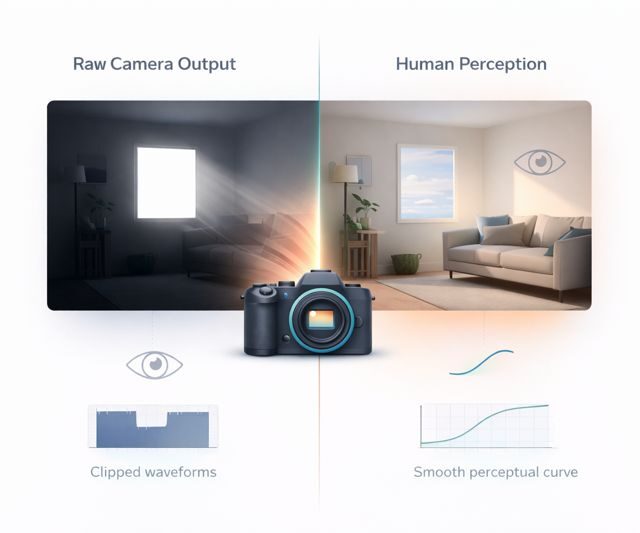
Cameras measure brightness using physical data, not perception. This often leads to:
Loss of detail in shadows
Blown-out highlights
Unnatural-looking midtones
This is why footage straight out of the camera may not look the way a scene felt in real life.
Example When shooting indoors with a bright window, either the window becomes white or the room turns too dark.
The Solution – Non-Linear Processing (Log)
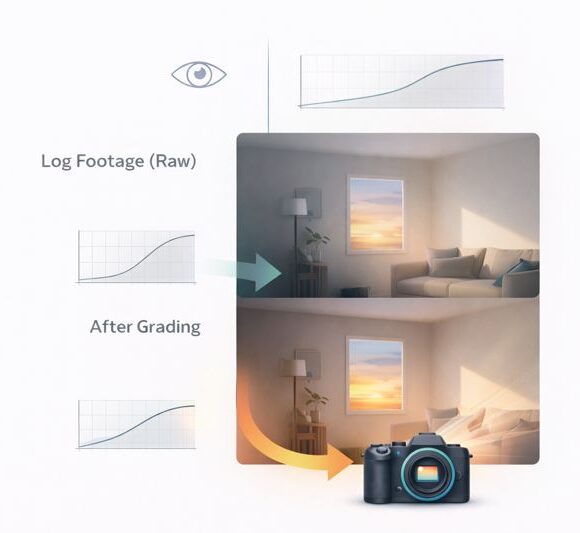
To bring camera footage closer to human vision, cameras apply a non-linear relationship between brightness and output. This is known as a Log relationship.
Log curves compress highlights and expand shadows, allowing more usable data to be stored—especially in midtones, where human vision is most sensitive.
Example Log footage looks flat initially but retains detail that can be restored during color grading.
How Cameras Handle Color
Cameras do not truly see color. They approximate colors based on sensor data and internal processing.
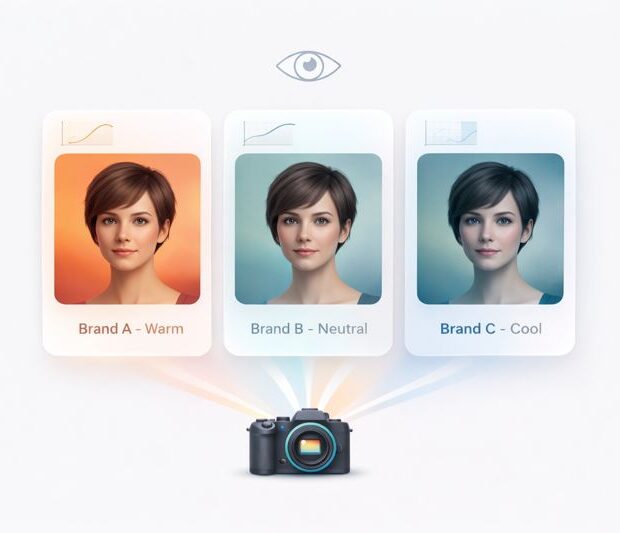
Each camera manufacturer uses a different color science, which affects how skin tones, greens, and overall color mood appear.
Example The same subject filmed on two different brands may look warmer or cooler even under identical lighting.
More Cores, Better Multitasking
AMD processors excel at parallel workloads — content creation, compiling code, streaming, and multitasking-heavy tasks.
Better Price-to-Performance
You get near-Intel performance for almost half the cost. Perfect for users who want value + power.
Overclocking Freedom
Most AMD CPUs come unlocked, letting enthusiasts extract even more power.
Balanced Thermals
While early-gen AMD CPUs ran hotter, the Zen+ and newer chips maintain strong performance with efficient cooling.
Evolving Fast
Each generation delivers architectural refinements — better efficiency, IPC gains, and improved gaming responsiveness.